Exploring Vision and Agentic AI: Google Vision AI, Veo 3, ChatGPT Agent
Introduction to Agentic AI
Agentic AI refers to artificial intelligence systems that possess a degree of autonomy, enabling them to take actions based on their understanding of the environment and contextual information. This form of intelligence is characterized by its capability to perceive, interpret, and act upon data, significantly enhancing how tasks are executed in various sectors. The emergence of agentic AI represents a remarkable advancement in the technology landscape, influencing numerous industries including healthcare, finance, and autonomous vehicles.
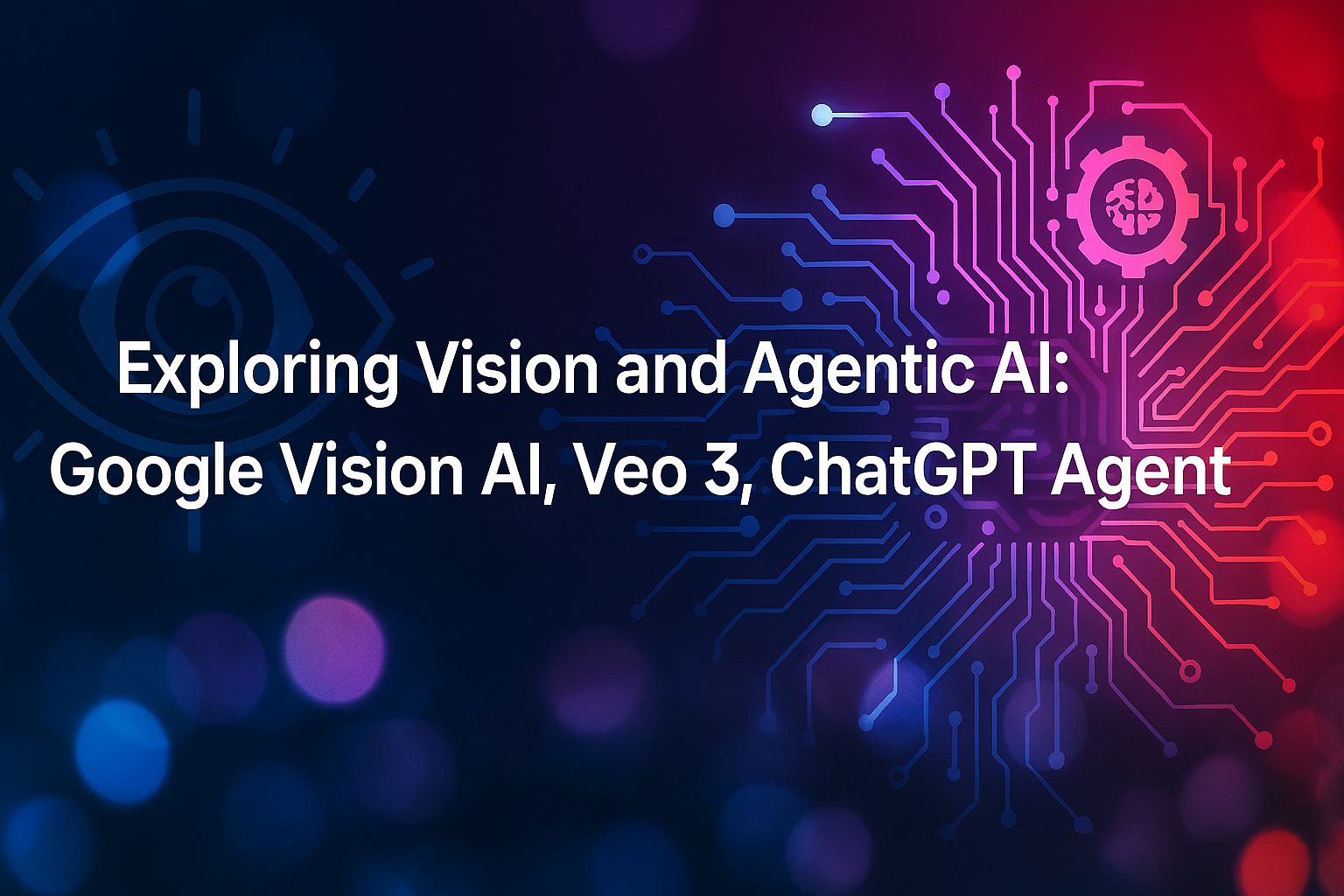
One of the key aspects of agentic AI is its integration with vision technology, which allows these systems to analyze visual data for informed decision-making. Google Vision AI is a leading example of this technology, offering a suite of APIs that empower developers to incorporate image recognition and analysis into their applications. Similarly, Veo 3 applies advanced visual analysis to provide automated insights for sports coaches, demonstrating how such technologies can enhance performance through data utilization. ChatGPT Agent, on the other hand, highlights the conversational aspect of agentic AI, facilitating human-like interactions through natural language processing.
The significance of agentic AI in today’s technological landscape cannot be overstated. As organizations seek to leverage intelligent systems for improved efficiency and innovation, understanding the nuances of agentic AI becomes crucial for developers. This blog post aims to explore these cutting-edge technologies, shedding light on their functionalities and implications across different domains. The insights provided will not only inform readers about the potential of these systems but also equip them with actionable knowledge for integrating agentic AI into their projects, ensuring they remain competitive in an evolving digital environment.
Google Vision AI: Overview and Capabilities
Google Vision AI is a powerful tool designed to enhance image recognition and analysis capabilities for various applications. Built on advanced machine learning algorithms, this innovative platform allows users to not only process images but also derive valuable insights from them. With its ability to identify objects, text, and even facial expressions, Google Vision AI has become an essential asset for businesses seeking to automate processes and improve customer experiences.
The strengths of Google Vision AI lie in its robust functionality. It employs deep learning models to evaluate images and accurately classify them according to pre-defined categories. This capability is particularly beneficial for industries such as retail, where businesses can use the platform to analyze customer interactions with products. For example, retailers can implement image searches to facilitate product recommendations, ultimately enhancing the shopping experience and boosting sales.
In terms of limitations, one notable challenge associated with Google Vision AI is its occasional struggle with contextual understanding. While the platform excels in identifying objects and features within an image, it may misinterpret subtler contextual cues. For instance, it might struggle with understanding the emotional nuance in an image or the relationships between various elements depicted. Such limitations underscore the importance of human oversight, especially in applications demanding nuanced interpretation.
Recent updates to Google Vision AI have focused on enhancing performance and expanding capabilities. Innovations such as improved Optical Character Recognition (OCR) have made it easier for businesses to extract text from images reliably. To leverage Google Vision AI effectively, developers are encouraged to incorporate its API into their applications, allowing them to tap into its advanced image analysis tools to address specific business challenges. By understanding both the strengths and limitations of this technology, businesses can make informed decisions about how to integrate it into their operations.
Exploring Veo 3: Features and Applications
Veo 3 is a cutting-edge perception and vision system that has garnered attention due to its unique capabilities and diverse applications. Unlike traditional systems, Veo 3 harnesses advanced machine learning algorithms and high-resolution imaging techniques to deliver superior performance in various fields. One of its standout features is its ability to process real-time data, allowing it to make immediate decisions and enhance operational efficiency.
In the healthcare sector, Veo 3’s sophisticated image recognition capabilities enable medical professionals to diagnose conditions with greater accuracy. For instance, its application in radiology facilitates the swift analysis of X-rays and MRIs, dramatically improving the speed of patient care. Additionally, its integration in hospitals can automate various processes, from patient registration to monitoring vitals, making it an invaluable tool in modern healthcare environments.
Surveillance has also seen a significant transformation through Veo 3. Its advanced facial recognition and object tracking features enhance security measures, allowing organizations to monitor premises effectively. The system can identify potential threats by analyzing behaviors in real time, thus contributing to a safer environment. From retail spaces to urban areas, Veo 3 stands out as a reliable solution for robust surveillance needs.
When comparing Veo 3 to its competitors, such as Google Vision AI, it is clear that Veo 3 excels in adaptability and user-friendliness. Its modular structure allows developers to customize applications, tailoring solutions that fit specific organizational requirements. This flexibility, coupled with comprehensive API support, makes it an ideal choice for businesses looking to incorporate vision systems into their workflows efficiently.
As industries continue to evolve towards automation and enhanced analytics, the adoption of systems like Veo 3 will undoubtedly play a critical role in shaping the future landscape. By integrating Veo 3, organizations can expect not just improved functionality but also a considerable competitive advantage in their respective fields.
ChatGPT Agent: The Future of Conversational AI
The ChatGPT Agent represents a significant advancement in the realm of conversational Artificial Intelligence (AI). Unlike standard ChatGPT, which primarily generates text based on user prompts, the ChatGPT Agent is designed to handle agent-enabled chats that enable interactive, context-aware conversations. Its enhanced capabilities allow it to perform tasks that go beyond simple question-and-answer dynamics, fostering more engaging and productive exchanges.
One of the key features of the ChatGPT Agent is its ability to seamlessly integrate into various workflows. Whether in customer service, educational contexts, or healthcare settings, the agent employs natural language processing to understand users’ intents accurately. This capability ensures efficient interactions, where users feel understood and valued, promoting effective engagement. Organizations can leverage the ChatGPT Agent to automate routine inquiries, manage bookings, or provide personalized recommendations based on users’ preferences.
Real-life applications of the ChatGPT Agent can be observed across diverse industries. For instance, in e-commerce, companies are using it to enhance user engagement by providing instant support and product recommendations, ultimately driving higher conversion rates. In education, the agent serves as a tutoring companion, offering tailored assistance based on individual learning styles and progress. These examples highlight the agent’s versatility and effectiveness in improving user experiences across different sectors.
To implement the ChatGPT Agent successfully, organizations should consider best practices such as training the agent with domain-specific data to enhance its contextual understanding. Regular updates and user feedback mechanisms are vital for refining its performance over time. Integrating the ChatGPT Agent into existing systems thoughtfully can yield maximum benefits, ensuring that it becomes a valuable asset in achieving a more interactive and engaging user experience.
Other Developments in Agentic AI
The landscape of agentic AI is rapidly evolving, with notable advancements that are reshaping how artificial intelligence interacts with the world. One of the emerging concepts in this field is the development of autonomous agents. These agents are designed to operate independently, making decisions based on real-time data and learned experiences without requiring constant human oversight. This autonomy has significant implications in sectors such as finance, healthcare, and logistics, where timely decision-making can lead to more efficient operations.
Another trend is the increasing emphasis on tool use by AI systems. Traditionally, AI has been viewed as a tool for data analysis or simple task automation. However, contemporary developments are enabling AI agents to utilize multiple tools concurrently, optimizing their capabilities for complex problem-solving. For instance, an agent could employ sentiment analysis tools, data visualization software, and customer relationship management platforms to enhance its decision-making processes. This capability can lead to significant efficiencies across various industries, from enhancing customer service responses to refining market analysis.
Multi-agent ecosystems are also gaining traction. These environments enable multiple AI agents to collaborate, sharing information and resources to improve outcomes. Such collaborative efforts can result in innovative solutions to intricate problems that are often too multifaceted for single agents to handle. Companies pioneering these ecosystems, such as OpenAI with its ChatGPT models, are setting a precedent for AI applications that facilitate teamwork and coordination among agents. Key players in this field are also investing in frameworks that support interoperability, ensuring different agents can work seamlessly together.
For developers looking to stay ahead in this rapidly changing environment, it is crucial to remain informed about these trends and their associated technologies. Following industry developments, participating in relevant forums, and engaging with communities centered around agentic AI can provide valuable insights into potential applications and innovations on the horizon.
Ethical Considerations and Risks
The emergence of agentic AI technologies, such as Google Vision AI and ChatGPT Agent, necessitates a thorough examination of the ethical landscape surrounding their deployment. These advanced AI systems raise significant concerns related to privacy, inherent biases, safety risks, data governance, and the imperative for transparency. Developers and stakeholders must recognize these prevalent issues as they could fundamentally impact the integrity and acceptance of AI projects.
One primary concern lies in privacy. As agentic AI systems often rely on vast datasets for training, they may inadvertently infringe upon individuals’ privacy rights. Collecting and utilizing personal information without consent poses serious ethical dilemmas. Thus, businesses must implement robust data governance frameworks to ensure compliance with regulations and protect user data. This entails not only acquiring data transparently but also safeguarding it against unauthorized access and breaches.
Inherent biases in AI models represent another critical ethical challenge. If the training data used is skewed or not representative of diverse populations, the resulting algorithms can perpetuate discrimination and reinforce social inequalities. Developers must actively work to identify and mitigate these biases during the design phase. This includes employing diverse datasets and incorporating fairness assessments throughout the development lifecycle.
Furthermore, safety risks associated with agentic AI must not be overlooked. The potential for unintended consequences, such as harmful decision-making or misinformation generation, necessitates rigorous testing and validation of AI systems before deployment. Establishing clear guidelines and protocols can help ensure that AI solutions operate safely and effectively.
Ultimately, a commitment to ethical practices in the development and deployment of agentic AI technologies is crucial. Emphasizing transparency and accountability empowers users and fosters trust, leading to broader acceptance and beneficial outcomes for society at large. By addressing these considerations, developers can navigate the complexities of the ethical landscape while contributing to the responsible advancement of AI technologies.
Evaluating and Choosing the Right Tool
In the rapidly evolving landscape of artificial intelligence, selecting the right vision AI and agentic solutions requires a systematic evaluation process tailored to specific project needs. Organizations must begin by clearly defining their use cases. Whether the goal is image recognition, video analysis, or chatbot integration, understanding the scope of the project is critical. Each application may have unique requirements that directly influence the choice of technology.
Data requirements should also be a top consideration. Determine the volume and type of data that will be processed; this will not only affect the performance of the chosen solution but also its training and operational capabilities. Additionally, evaluate the compatibility of the selected AI tools with existing data structures. Effective integration can substantially enhance the efficiency and reliability of the AI system.
Latency is another crucial factor. The responsiveness of the AI tool can significantly impact user experience, especially in real-time scenarios such as monitoring and assistance applications. Therefore, assess the expected processing speeds and ensure they align with user expectations and operational requirements.
Cost considerations cannot be overlooked. Pricing structures can vary widely among providers, leading to significant differences in total ownership costs. Consequently, product teams should weigh the financial implications, such as licensing fees, infrastructure investments, and maintenance expenses, against the potential benefits offered by the solution.
Finally, compliance issues are increasingly pivotal in the decision-making process. Evaluating the data privacy regulations and ethical implications in the context of the chosen technology is essential. Ensuring that the selected tools adhere to legal standards will mitigate risks and facilitate smoother implementation.
To streamline the evaluation process, teams can utilize a checklist that encompasses these criteria—use cases, data requirements, latency, costs, and compliance. This structured approach will aid in making informed decisions and will ultimately lead to the successful integration of vision AI and agentic technologies into various projects.
Roadmap and Future Outlook
As we look ahead to the future of vision and agentic AI, it is imperative to consider the evolving landscape and the anticipated advancements that may emerge over the next 12 to 24 months. Numerous trends suggest a convergence of technologies that will enhance the capabilities of AI systems in visual processing and autonomous functioning. One significant trend is the refinement of machine learning algorithms, which is expected to bolster the accuracy and efficiency of image recognition and processing. This advancement will not only improve existing applications but pave the way for new ones.
Another area ripe for development is the integration of computer vision with natural language processing, exemplified by systems like ChatGPT Agent. By synergizing these technologies, developers can create more sophisticated AI assistants that can interpret complex visual data while simultaneously engaging in human-like dialogue. This capability will enhance user experience across various sectors, including customer service, healthcare, and education, where visual comprehension is crucial.
In terms of innovations to monitor, the growing emphasis on ethical AI and responsible data usage is becoming increasingly essential. Developers and product teams must equip themselves with robust frameworks that ensure transparency and mitigate biases inherent in AI systems. This proactive approach will not only adhere to regulatory standards but also foster trust among end-users.
Finally, collaboration within the AI community will be a hallmark of the coming years. Cross-disciplinary partnerships, particularly between researchers in AI and industry practitioners, will stimulate creative solutions that address real-world challenges. By staying attuned to these emerging trends and innovations, stakeholders in the AI sector can strategically position themselves to adapt and thrive in this dynamic environment.
Quick-Start Ideas: Practical Projects to Prototype
For developers eager to explore the capabilities of Google Vision AI, Veo 3, and agentic AI technologies, implementing practical projects can serve as an excellent foundation for knowledge and skill enhancement. Below are five actionable project ideas designed to inspire experimentation and innovation within this exciting realm of artificial intelligence.
1. Image Classification App: Utilizing Google Vision AI, create a mobile or web application that classifies uploaded images into predefined categories. The necessary inputs would include a collection of labeled images for training the model. Processing steps involve using Google Vision AI’s image recognition features to analyze the uploaded images and categorize them based on the training data. Expected outcomes include high accuracy in image classification and user engagement through interactive application features.
2. Real-time Object Tracking: With Veo 3, developers can create a system that detects and tracks objects in a live video feed. Data inputs consist of video streams captured from cameras placed strategically in an environment. Processing steps involve applying Veo 3’s tracking algorithms to identify and follow objects in real time. The outcome would be an efficient object-tracking tool applicable in security systems or retail analytics.
3. Personalized Chatbot Using ChatGPT: Leverage the capabilities of the ChatGPT Agent to build a chatbot that adapts responses based on user interactions. Useful data inputs include historical chat logs to train the AI effectively. Processing consists of fine-tuning the model with conversational context to enhance response accuracy. The expected outcome is a responsive and engaging chatbot that improves user satisfaction.
4. Automated Image Caption Generator: A project utilizing Google Vision AI’s image analysis can lead to an automated captioning tool. The inputs required would be an extensive database of images paired with descriptive text. The processing involves analyzing the images and generating captions using AI-derived insights. This project can yield engaging content for social media platforms.
5. AI-Powered Sentiment Analysis: Integrating both Google Vision AI and ChatGPT, create a system that analyzes user-generated multimedia content for sentiment. Data inputs can include text, images, and videos from social media platforms. Processing steps will involve sentiment extraction and categorization. The anticipated outcome is a robust tool aiding brands in understanding customer sentiment.
By engaging in these project ideas, tech enthusiasts and developers can gain hands-on experience with cutting-edge AI technologies while contributing to their understanding of the integration between vision and agentic AI.