
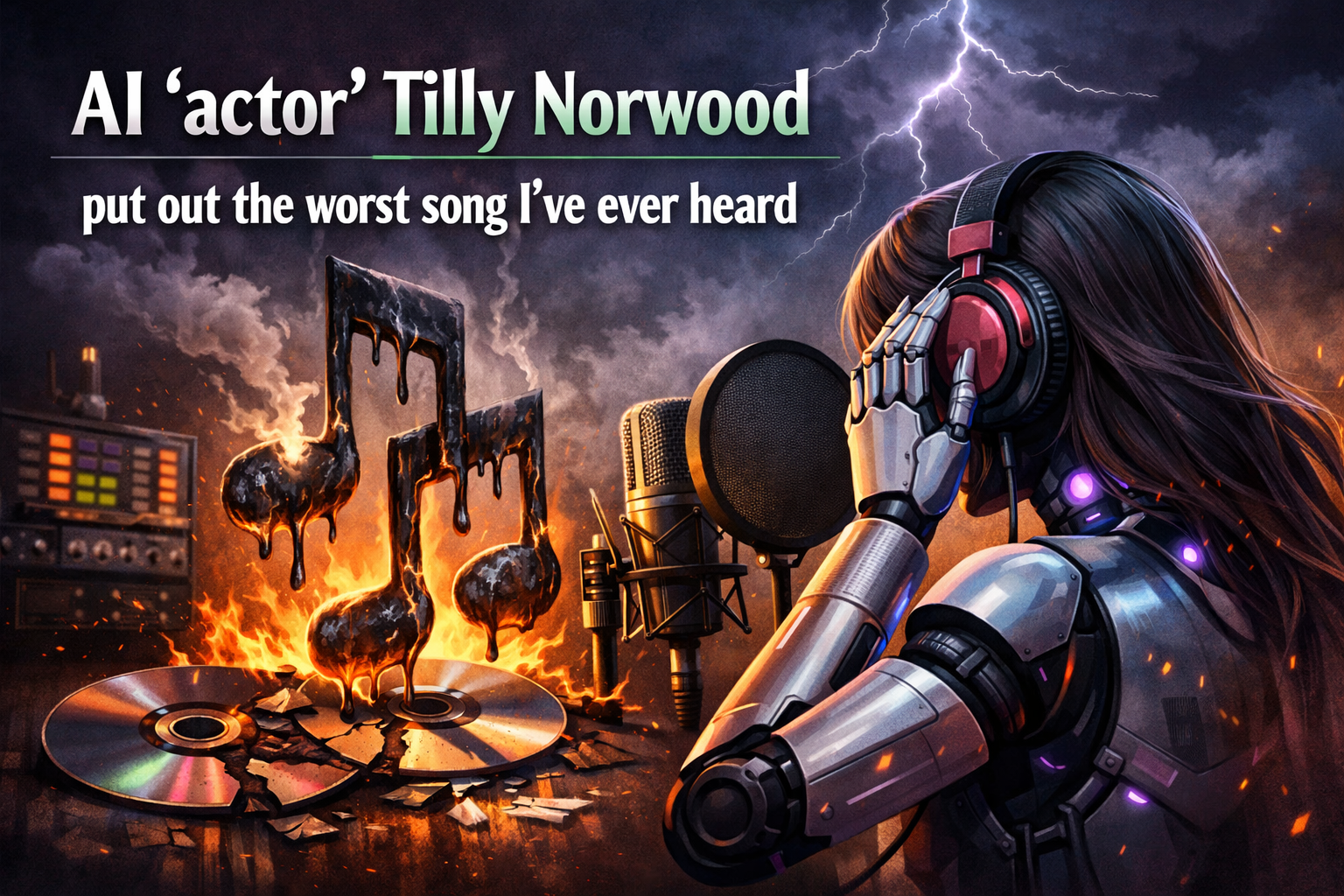
AI ‘Actor’ Tilly Norwood Put Out the Worst Song I’ve Ever Heard
In an era where artificial intelligence is increasingly stepping into creative domains, from writing novels to generating art, the boundaries of what machines can achieve are constantly being pushed. However, not every foray is a resounding success. Recently, the digital world was abuzz, and not in a good way, with news that AI ‘actor’ Tilly Norwood put out the worst song I’ve ever heard. This particular incident serves as a stark reminder that while AI boasts incredible potential, it also faces significant hurdles, especially when it comes to the subjective, nuanced realm of human emotion and artistic expression. This isn’t just about one bad track; it’s a window into the challenges and limitations of AI-generated content in a field dominated by human passion.
The rise of AI in entertainment has been both fascinating and, at times, unsettling. We’ve seen AI create realistic deepfakes, assist in movie scriptwriting, and even generate background scores for video games. The concept of an “AI actor” like Tilly Norwood itself signifies a bold step towards fully synthetic celebrity personas. But when an entity designed for performance attempts something as personal as music, the results can be polarizing. This recent musical misadventure from Tilly Norwood isn’t merely a poor review; it prompts a broader discussion about authenticity, creativity, and the very definition of art when a machine is at the helm.
The Curious Case of Tilly Norwood: An AI Persona in the Spotlight
Tilly Norwood isn’t your typical human celebrity. As an “AI actor,” she represents the bleeding edge of virtual entertainment, a digital construct designed to perform, interact, and theoretically, emote. The concept aims to push boundaries, offering new avenues for content creation without the logistical challenges often associated with human talent. Tilly’s digital persona is crafted with sophisticated algorithms, capable of mimicking human expressions, movements, and vocal patterns, making her a compelling figure in the virtual landscape. Her existence alone sparks conversations about intellectual property, the future of work, and what it means to be “real” in an increasingly digital world.
Before this controversial musical release, Tilly Norwood’s presence was primarily within the acting sphere, where AI can excel in replicating predetermined scripts and visual cues. The shift to music, however, introduces a different set of expectations. Music is often seen as a direct conduit for human feeling, a spontaneous expression of joy, sorrow, or longing. Can an AI, no matter how advanced, truly capture these intricacies without genuine lived experience? The answer, as Tilly’s song suggests, is complex and, in this instance, leaning towards a resounding “no.” The ambition was clear, but the execution, perhaps, lacked the soul that listeners instinctively crave.

Deconstructing the Sonic Disaster: Why AI ‘actor’ Tilly Norwood put out the worst song I’ve ever heard
When the reviews started pouring in for Tilly Norwood’s new track, the overwhelming sentiment was one of disbelief and disappointment. Commentators used strong language, from “unlistenable” to “a soulless cacophony.” It wasn’t just a matter of subjective taste; there seemed to be a consensus that this particular piece of AI-generated music missed the mark in fundamental ways. But what exactly went wrong?
Several factors likely contributed to the song’s disastrous reception:
- Lack of Emotional Depth: Music connects with listeners on an emotional level. AI, while capable of mimicking emotion, struggles to generate it authentically. The song likely felt sterile, formulaic, and devoid of genuine feeling, which is critical for captivating an audience.
- Uninspired Lyrical Content: If AI wrote the lyrics, they might have relied on predictable patterns or clichés, failing to offer fresh perspectives or compelling narratives. Good lyrics often come from unique human experiences and observations.
- Melodic and Harmonic Incoherence: AI can be trained on vast datasets of music, but synthesizing new, pleasing melodies and harmonies requires more than just statistical probabilities. It needs an understanding of tension, release, and progression that AI sometimes fails to grasp, leading to jarring or monotonous compositions.
- Production Quality Issues: Even with strong underlying composition, poor mixing, mastering, or vocal processing (especially for an AI-generated vocal performance) can render a song unpleasant.
The feedback wasn’t merely negative; it was passionate, indicating that the song provoked a strong, adverse reaction. For many, it likely confirmed their fears about AI’s limitations in truly creative fields, solidifying the impression that AI ‘actor’ Tilly Norwood put out the worst song I’ve ever heard, not just a bad one.
The Broader Implications for AI in Creative Industries
Tilly Norwood’s musical misstep isn’t an isolated incident; it’s a potent case study that highlights ongoing debates about AI’s role in creative endeavors. While AI can be a powerful tool for artists, assisting with tasks like generating variations, synthesizing sounds, or even composing background music, its capacity to originate profound, emotionally resonant art remains questionable. This event underscores several key considerations:
- Authenticity vs. Replication: Can AI truly create authentic art, or does it merely replicate patterns from existing human creations? The line is blurry, but for an artwork to truly resonate, it often requires a unique human spark.
- The Human Element: Art is often a reflection of the human condition, born from experiences of love, loss, joy, and struggle. An AI, by its very nature, lacks these experiences, making it difficult to imbue its creations with the same depth.
- Ethical Concerns: Who owns the copyright for AI-generated music? What impact does the proliferation of AI-generated content have on human artists and their livelihoods? These are questions that will only grow in importance as AI capabilities advance. For more on the ethical considerations of AI in art, read this insightful article from Wired on AI Music and Ethics.
- The Definition of “Artist”: If an AI can create music, does that make it an artist? Or is the artist the programmer who trained the AI? The answer has profound implications for how we perceive creative authorship.
This incident forces us to confront the limitations of current AI technology. While it excels at data processing and pattern recognition, it often falters when true creativity, intuition, and emotional intelligence are required. The difference between technically correct and artistically profound is vast, and it’s a gap that AI is still struggling to bridge, as evidenced by the fact that AI ‘actor’ Tilly Norwood put out the worst song I’ve ever heard.
Bridging the Gap: AI as a Tool, Not a Replacement
Despite the recent setback, the future of AI in music is not entirely bleak. The incident with Tilly Norwood’s song should be seen not as an end, but as a learning opportunity. The most promising path for AI in creative fields lies in its role as a collaborative tool rather than an autonomous creator. Imagine AI that assists human composers in overcoming writer’s block, generates new rhythmic patterns, or even helps with the intricate process of orchestration.
For example, a human artist could provide the core melody and emotional intent, allowing AI to generate variations, suggest harmonies, or even perform virtual instruments with a level of precision and speed unmatched by a human. This approach leverages AI’s strengths in computation and pattern recognition while preserving the indispensable human element of creativity, intuition, and emotional expression. This symbiotic relationship could lead to entirely new forms of music that blend technological innovation with human soul. Platforms like AIVA and Amper Music are already demonstrating how AI can be a powerful assistant in music creation, enhancing human workflows rather than replacing them. Their successes stand in contrast to the reception received when AI ‘actor’ Tilly Norwood put out the worst song I’ve ever heard.

The Road Ahead for AI in Art: Learning from Failures
Every innovation journey is paved with both successes and failures. The critical reception of Tilly Norwood’s song, while harsh, provides invaluable data and insight. It highlights what audiences truly value in music – not just technical proficiency, but genuine emotion, originality, and a human touch. As AI technology continues to evolve, developers and artists must heed these lessons. The focus should shift from merely generating content to creating content that resonates with human audiences on a deeper, more meaningful level.
The development of more sophisticated AI models that can better understand and simulate complex emotional nuances will be crucial. This might involve training AI on more diverse datasets that include a wider range of emotional expressions in music, or even incorporating real-time feedback mechanisms from human listeners during the composition process. Collaboration between AI engineers, musicians, and psychologists could lead to breakthroughs that prevent future instances where, for lack of a better phrase, an AI ‘actor’ Tilly Norwood put out the worst song I’ve ever heard.
Ultimately, the goal isn’t to replace human artists but to augment their capabilities and explore new frontiers of creativity. The “failure” of Tilly Norwood’s song is not a death knell for AI in music, but a signpost pointing towards the areas where more research, refinement, and a deeper understanding of human artistic sensibilities are needed. The future of AI in creative industries will likely be defined by how well we learn from these early experiments, embrace collaboration, and recognize that true art often transcends pure algorithms. As we move forward, striking this delicate balance between innovation and authenticity will be paramount. For further reading on the challenges AI faces in creative fields, you can explore this article on TechCrunch about AI’s creative struggles.
#AI
#AIActor
#TillyNorwood
#AIMusic
#CreativeAI
#TechnologyFails
#DigitalArt
#FutureOfMusic