Court Filing: Pentagon Said It Was Nearly Aligned with Anthropic, Days Before Trump Declared It Over
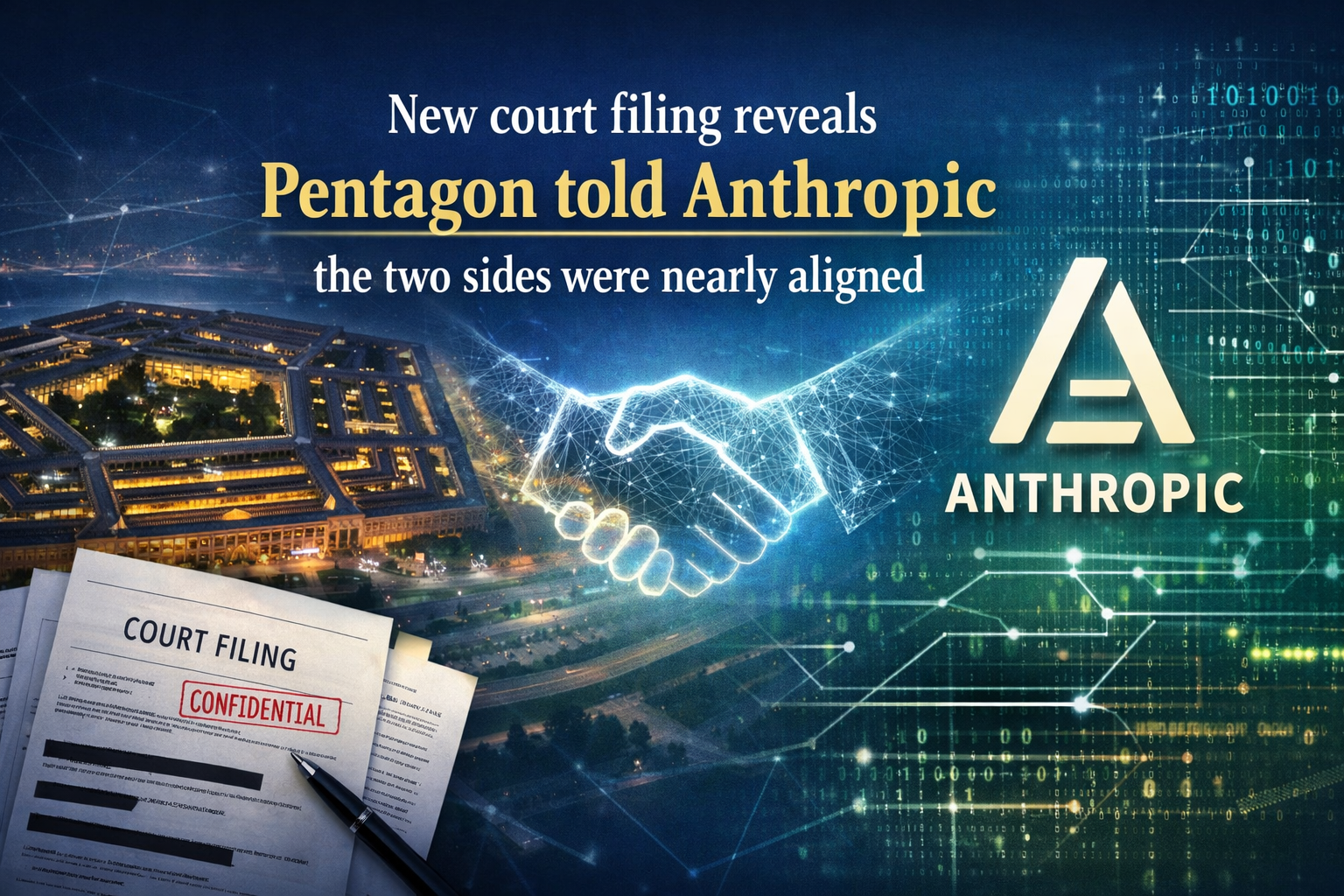
The landscape of government-tech partnerships is often fraught with complexities, but a recent revelation has cast a spotlight on the significant disconnects that can exist between public declarations and internal communications. A new court filing reveals Pentagon told Anthropic the two sides were nearly aligned — a week after Trump declared the relationship kaput. This stunning disclosure not only highlights potential political interference in critical defense initiatives but also raises serious questions about transparency, trust, and the future of AI development within national security frameworks. For many, this incident underscores the precarious tightrope walk companies like Anthropic must perform when engaging with government contracts, especially when political rhetoric diverges sharply from operational realities.
The core of the controversy lies in a stark contradiction. While the former President publicly stated that the relationship between the Department of Defense (DoD) and leading AI firm Anthropic was over, internal documents suggest a very different picture. This isn’t merely a matter of semantics; it points to a fundamental misalignment that could have profound implications for national security, technological advancement, and public confidence in government dealings. Understanding the nuances of this court filing is crucial to grasping the broader challenges facing both defense contractors and emerging tech innovators.
The Discrepancy: Pentagon’s Internal View vs. Public Declaration
At the heart of this unfolding story is a remarkable divergence between what was communicated privately and what was declared publicly. The newly surfaced court filing details how the Pentagon, through its internal channels, conveyed to Anthropic that their collaboration was proceeding positively, with both parties “nearly aligned” on key objectives and operational pathways. This internal communication painted a picture of a productive and continuing partnership, focusing on the strategic importance of Anthropic’s AI capabilities for defense applications.
However, just a week prior to this reassuring internal message, then-President Trump made a public declaration asserting that the relationship between the Pentagon and Anthropic was “kaput.” This public statement, delivered with the weight of presidential authority, suggested an abrupt end to any potential collaboration. The timing and nature of these two conflicting narratives could not be more stark. One indicated a strong, ongoing partnership on the verge of significant progress, while the other signaled a definitive termination. This profound disconnect forces a closer examination of the factors influencing government contracts and the role of political influence.
The ramifications of such conflicting signals are manifold. For Anthropic, a cutting-edge AI firm, navigating such an environment presents immense challenges. How does a company plan its resources, strategic initiatives, and public relations when the official governmental stance is so ambiguous? For the Pentagon, it raises questions about the autonomy of its procurement processes and its ability to make independent decisions based on strategic necessity rather than political directives. The incident prompts a necessary discussion about the integrity of the procurement process, particularly in sensitive areas like advanced AI, which are crucial for maintaining a technological edge.

Implications of the Revelation: Navigating Government Contracts and Political Winds
The revelation that a new court filing reveals Pentagon told Anthropic the two sides were nearly aligned — a week after Trump declared the relationship kaput carries significant weight for several key stakeholders. Firstly, for technology companies vying for government contracts, it highlights the inherent risks of political volatility. Contracts that appear secure can be jeopardized by external political declarations, regardless of the operational alignment or mutual interest expressed by the directly involved agencies. This creates an unpredictable environment, complicating long-term strategic planning and investment in specialized defense-related AI capabilities.
-
Challenges for AI Developers in the Defense Sector
AI developers, particularly those working on sensitive applications for national security, often require stable, long-term partnerships to mature their technologies. The stop-and-go nature suggested by this incident can be detrimental, wasting resources and potentially delaying the deployment of critical innovations. Companies like Anthropic invest heavily in research and development, and the instability introduced by political interference makes these investments riskier. They must consider not just the technical feasibility and strategic alignment, but also the fluctuating political landscape.
-
Impact on Public Trust and Government Transparency
When public statements contradict internal communications so dramatically, public trust in government processes can erode. Citizens and industry partners alike expect a degree of consistency and transparency from official channels. This incident suggests a potential lack of coherence, or worse, deliberate obfuscation, which can lead to cynicism regarding how defense decisions are made. A healthy democracy relies on trust, and such discrepancies challenge that foundation.
Furthermore, the incident raises important questions about the separation of powers and the operational autonomy of executive agencies. While political leadership sets broad policy, direct intervention in specific contractual relationships, especially when it contradicts the assessments of experts within the relevant department, can be problematic. It blurs the lines between political rhetoric and strategic imperative, potentially sidelining crucial technological advancements for short-term political gains. Read more about the broader context of AI in government from leading tech publications like The Verge for deeper insights into these complex interactions.
The Pentagon’s Stance and Anthropic’s Position
Following the emergence of the court filing, both the Pentagon and Anthropic face renewed scrutiny. For the Pentagon, the challenge lies in explaining the disconnect and reassuring partners that its operational decisions are made on merit and strategic necessity. It’s crucial for the DoD to articulate how it navigates political pressures while maintaining its mission-critical objectives, especially in the rapidly evolving field of AI. This incident might prompt a reevaluation of how inter-agency communications are managed and how external political statements are addressed internally to maintain clarity and consistency.
Anthropic, on its part, is a prominent player in responsible AI development. The company’s focus on safety and ethical AI aligns with many of the DoD’s stated goals for AI procurement. Being caught in the crossfire of political declarations and internal communications poses a significant reputational challenge. While the court filing suggests a positive internal relationship, the public ‘kaput’ declaration could create uncertainty among investors, employees, and other potential partners. The company’s future engagements with government agencies will likely be viewed through the lens of this past experience, emphasizing the need for robust contractual safeguards and clear communication channels.
For more detailed analyses of how technology companies navigate government partnerships, consider exploring resources available on TechPerByte.com, where expert insights delve into the intricacies of these critical relationships. This ongoing story is a stark reminder of the complexities involved when advanced technology meets the world of politics and national security.

Navigating the Future: Lessons from the Pentagon-Anthropic Saga
The incident where a new court filing reveals Pentagon told Anthropic the two sides were nearly aligned — a week after Trump declared the relationship kaput serves as a critical case study for understanding the challenges at the nexus of technology, government, and politics. It underscores the imperative for clearer guidelines and protocols when high-level political figures comment on ongoing or potential defense contracts, especially those involving nascent and strategically vital technologies like artificial intelligence.
One key lesson is the need for enhanced resilience in contractual frameworks. Tech companies engaging with the government might need to build in stronger clauses that protect against abrupt, non-merit-based terminations or significant directional shifts dictated by political rhetoric rather than strategic assessments. This could involve clearer definitions of what constitutes a ‘valid’ termination and potentially higher compensation for sudden, politically motivated changes.
Moreover, the saga highlights the importance of internal consistency within government bodies. Agencies like the DoD must strive for unified messaging, ensuring that internal communications reflect the external stance, or at least that any discrepancies are quickly clarified and rectified. This fosters trust both within the government and among its private sector partners, which is essential for collaborative efforts on national security initiatives. Without this consistency, the agility and effectiveness of the nation’s defense technology strategy could be hampered.
The Broader Picture: AI, National Security, and Political Influence
The Pentagon’s relationship with leading AI firms like Anthropic is not just about a single contract; it’s emblematic of a broader national strategy to integrate advanced AI into defense capabilities. The U.S. government views AI as a critical component for maintaining its strategic advantage, from intelligence gathering to autonomous systems. Therefore, any disruption to partnerships with leading innovators can have far-reaching consequences for national security.
This episode also brings to the forefront the delicate balance between political oversight and operational independence. While elected officials have a legitimate role in shaping national policy, there’s a fine line between strategic guidance and direct intervention that overrides expert assessment. Striking this balance is crucial for ensuring that the military can access the best technology available without being unduly influenced by short-term political cycles. As we move further into an era defined by rapid technological change, fostering stable and predictable partnerships with the private sector becomes increasingly vital. Visit this TechPerByte.com article on AI ethics to understand the deeper implications of government involvement in AI development.
In conclusion, the revelation that a new court filing reveals Pentagon told Anthropic the two sides were nearly aligned — a week after Trump declared the relationship kaput is more than just a piece of news; it’s a window into the complex, often turbulent, dynamics between government, technology, and politics. Its implications will resonate through future procurement processes, influencing how tech companies approach defense contracts and how government agencies manage their relationships with crucial industry partners. Transparency, consistency, and a clear understanding of respective roles will be paramount in navigating these waters successfully going forward.
#AI
#GovernmentContracts
#NationalSecurity
#Pentagon
#Anthropic
#PoliticalInterference
#TechPolicy
#DefenseTech
#CourtFiling
#Transparency