

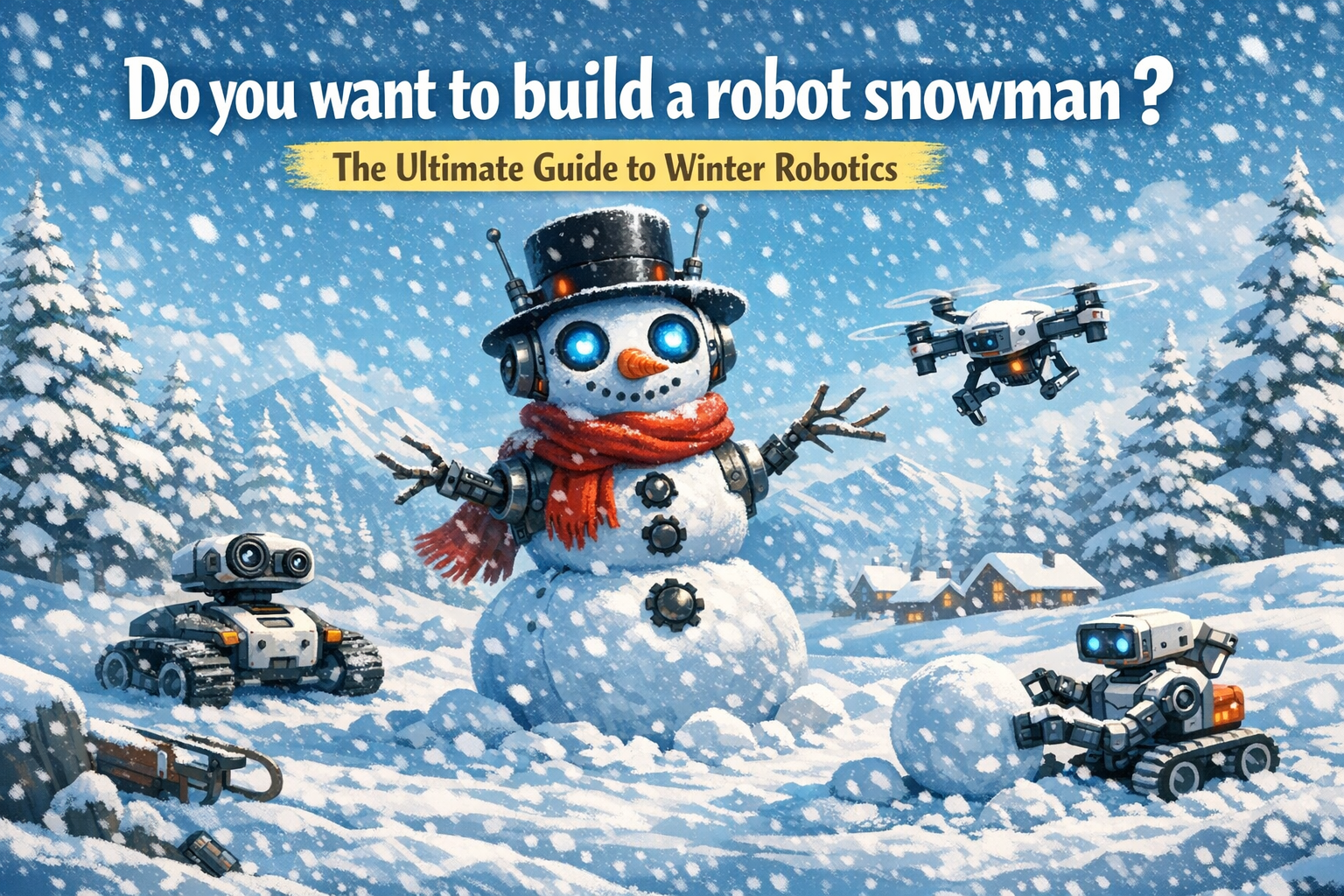
Do You Want to Build a Robot Snowman?
The magic of winter often brings with it the timeless tradition of building a snowman. But what if we could infuse that classic joy with a touch of modern innovation? What if your frosty friend could move, interact, or even build itself? The question isn’t just a whimsical thought; it’s becoming a tangible project for tech enthusiasts and DIYers alike. So, seriously, do you want to build a robot snowman? This ambitious project marries the wonder of snow with the cutting-edge capabilities of robotics and artificial intelligence, promising a winter experience like no other. Indeed, to embark on such an endeavor, where your frosty creation moves and interacts, means asking yourself: do you want to build a robot snowman?
Far beyond stacking three snowballs and adding a carrot nose, creating an autonomous snow-sculpting robot or an interactive robot snowman involves a fascinating journey through mechanics, programming, and weatherproofing. It’s a challenge that pushes the boundaries of outdoor robotics, offering immense satisfaction to those who dare to dream of a mechanized winter wonderland. Let’s delve into the exciting world where snow meets servos, and cold meets code.
The Dream of a Robotic Snowman: Why Blend Tradition with Tech?
For generations, building a snowman has been a quintessential winter activity, a simple pleasure that connects us with nature and creativity. However, in our increasingly digital world, the allure of augmenting traditional experiences with technology is irresistible. Imagine a snowman that waves back, spins around, or even lights up the snowy landscape with programmed patterns. Such a creation transforms a static sculpture into a dynamic, interactive spectacle.
The motivation behind wanting to build a robot snowman extends beyond mere novelty. It’s an incredible learning opportunity, a hands-on project that encompasses various STEM disciplines. From mechanical engineering for structural integrity to software development for autonomous movement and interaction, it provides a holistic approach to robotics. Furthermore, it’s a chance to experiment with outdoor automation in challenging environmental conditions, pushing the limits of what consumer-grade electronics can achieve.
Why a Robot Snowman? Beyond the Traditional Snowman
A traditional snowman is beautiful but fleeting. A robotic snowman, while still susceptible to melting, offers functionalities that a static one cannot. It could greet visitors, play music, or even project images onto its snowy surface. Think of it as a temporary art installation, an interactive exhibit, or a proof-of-concept for more complex outdoor robots. The possibilities are truly as vast as your imagination and as deep as your technical skills.
Embracing this challenge means stepping into the realm of practical robotics. It’s about more than just fun; it’s about understanding motor control, sensor integration, power management in cold temperatures, and robust design. Ultimately, the question, “Do you want to build a robot snowman?” becomes a gateway to exploring advanced technological concepts in a highly engaging and visible way.

Essential Components & Technologies for Your Frosty Friend
Embarking on the journey to build a robot snowman requires a thoughtful selection of components, each playing a crucial role in bringing your winter wonder to life. The outdoor environment, especially cold and wet conditions, adds a layer of complexity to component choice and protection.
The Brain: Microcontrollers & AI
At the heart of any robot is its controller. For a project as ambitious as wanting to build a robot snowman, robust microcontrollers or single-board computers are ideal. An Arduino or Raspberry Pi can serve as the brain, processing sensor data, controlling motors, and executing programmed behaviors. For more advanced features, such as facial recognition for interaction or complex pathfinding for self-building capabilities, integrating AI libraries or even a tiny machine learning model might be necessary. This allows your robot snowman to react intelligently to its surroundings, identifying familiar faces or responding to voice commands.
The Muscles: Motors & Actuators
To move, rotate, or articulate parts, your robot will need motors and actuators. High-torque servo motors are excellent for precise movements like waving an arm or turning a head. Stepper motors can provide more continuous rotation for rolling snowballs, if you’re aiming for a self-building robot snowman. Ensure these components are rated for outdoor use or adequately protected from moisture and extreme cold. Learn more about basic robotics components here.
The Senses: Sensors for Snow & Environment
To interact with its environment, your robotic snow creation needs sensors. Ultrasonic sensors can detect obstacles or measure distances, useful for navigation. Temperature and humidity sensors help monitor the external conditions, allowing the robot to adapt its behavior or alert you to potential issues like rapid melting. Furthermore, cameras could be used for visual perception, enabling object detection or even capturing festive photos.
Powering Your Creation in the Cold
Power is a significant consideration, especially in low temperatures where battery efficiency can drop dramatically. Large capacity lithium-ion batteries or even lead-acid batteries might be necessary, housed in insulated, waterproof enclosures. Solar panels could offer supplementary charging during daylight hours, but direct wiring to an indoor power source via a robust outdoor-rated cable might be more reliable for extended operation.
Designing Your Automated Snow Sculpture
Once you have a grasp of the fundamental components, the next step in answering “Do you want to build a robot snowman?” is to design how these pieces will come together. This involves considering both the aesthetic appeal of a snowman and the functional requirements of a robot.
Structural Integrity & Weatherproofing
Snow is a challenging medium. Your robot’s internal structure must be robust enough to support snow weight and withstand melting. A waterproof chassis and enclosures for electronics are non-negotiable. Consider using materials like ABS plastic, PVC, or even treated wood for the internal frame, ensuring all seams are sealed with silicone or rubber gaskets. Protecting electronics from moisture is paramount; use waterproof cases and apply dielectric grease to connectors.
Movement & Articulation
How will your robot snowman move? Will it be static, with only its head or arms articulating? Or will it be mobile, perhaps on treads or wheels, allowing it to patrol your yard? Designing the mechanism for movement requires careful thought. Treads offer better traction in snow than wheels, but also add complexity. For simpler articulation, focus on specific movements like a nodding head, waving arms, or a spinning torso, powered by strategically placed servos.
Personality & Interaction
What kind of personality will your robotic snow friend have? LED lights can create expressive eyes or light up the body at night. Speakers can deliver pre-recorded messages or play festive tunes. You might even integrate a small projector to display changing expressions or patterns on its snow surface. The more interactive features you include, the more captivating your robot snowman will be, truly answering the call: “Do you want to build a robot snowman?”
The Build Process: Bringing Your Robot Snowman to Life
Transitioning from design to construction is where the real fun – and challenges – begin if you want to build a robot snowman. This phase requires meticulous attention to detail, especially when dealing with outdoor conditions.
Planning & Prototyping
Before committing to final materials, sketch out your design in detail. Consider using CAD software to model your robot’s internal structure and component placement. Prototype critical mechanisms using cheaper materials like cardboard or 3D-printed parts. This helps identify design flaws before they become costly mistakes. Test your electronics indoors first, ensuring all code functions as expected before exposing them to the elements. For more in-depth insights into prototyping, check out Robotics Business Review on rapid prototyping.
Assembly & Integration
Assemble the internal frame, mounting the microcontroller, motors, sensors, and power supply securely within their waterproof enclosures. Pay close attention to cable management, ensuring all wires are protected and routed efficiently. Once the internal skeleton is complete, it’s time to apply the snow. This is the crucial step where your robot transforms into a recognizable snowman. You might need to build a base structure with chicken wire or a similar mesh to hold the snow around your robot’s core, then pack snow around it carefully.

Programming the Winter Wonder
The code is what brings your robot snowman to life, defining every movement and interaction. If you truly want to build a robot snowman, mastering this stage is crucial. You’ll need to program:
- **Motor Control:** Define sequences for arm waves, head turns, or movement.
- **Sensor Interpretation:** Code for reacting to temperature changes, detecting proximity, or responding to light.
- **Interactive Elements:** Logic for LED patterns, sound playback, or even simple conversational responses.
- **Power Management:** Routines to monitor battery levels and enter low-power modes when idle.
Consider using a state machine approach to manage different behaviors and transitions smoothly. Regularly testing and debugging your code is essential to ensure reliability.
Testing in the Elements
The ultimate test for your robot snowman is its performance in actual winter conditions. Start with short test runs, monitoring component temperatures, battery performance, and the integrity of your waterproofing. Observe how snow and ice accumulate and if they impede movement. Be prepared to make adjustments and iterations. The first snowfall might just be the beginning of a continuous improvement cycle for your automated snow friend. Explore more DIY robotics projects at TechPerByte.com.
Challenges & Future Innovations: The Road Ahead for Robot Snowmen
Building an outdoor robot, especially one integrated with snow, comes with its unique set of challenges, yet these very obstacles define the exciting journey when you decide to build a robot snowman.
Overcoming Frosty Obstacles
The primary challenges include moisture ingress, battery degradation in cold, mechanical friction from ice and snow buildup, and visibility issues for sensors during blizzards. Future innovations might include self-heating components, advanced waterproofing solutions like hydrophobic coatings, and AI-powered vision systems that can see through snow. The more robustly you design your components and software, the better your robot snowman will perform.
The Future of Autonomous Snow Creations
Imagine a future where autonomous snow-sculpting robots could clear driveways, create intricate ice sculptures, or even assist in search and rescue operations in snowy regions. The principles learned from building a playful robot snowman could be applied to serious, impactful robotic applications. This seemingly simple project is a microcosm of larger engineering challenges, pushing us to think about robotics in extreme environments.
Conclusion: Your Robotic Winter Wonderland Awaits
The concept of a robot snowman is a delightful blend of tradition and cutting-edge technology. It’s an ambitious DIY project that promises not only a unique winter decoration but also a profound learning experience in robotics, electronics, and programming. Truly, if you ever asked yourself, do you want to build a robot snowman, then this guide is your first step.
So, the question remains: do you want to build a robot snowman? If you’re ready to embrace the challenge, armed with creativity, technical know-how, and a love for winter, then your backyard is about to become the stage for a truly remarkable spectacle. Get ready to transform your snowy landscape with an automated, interactive friend that brings joy and technological wonder to the coldest months.
#Robotics
#DIY
#AI
#WinterTech
#OutdoorRobotics
#STEMProjects
#Automation
#InteractiveArt
#SnowTech
#TechProjects