Publisher Pulls Horror Novel ‘Shy Girl’ Over AI Concerns: Unpacking the Digital Dilemma
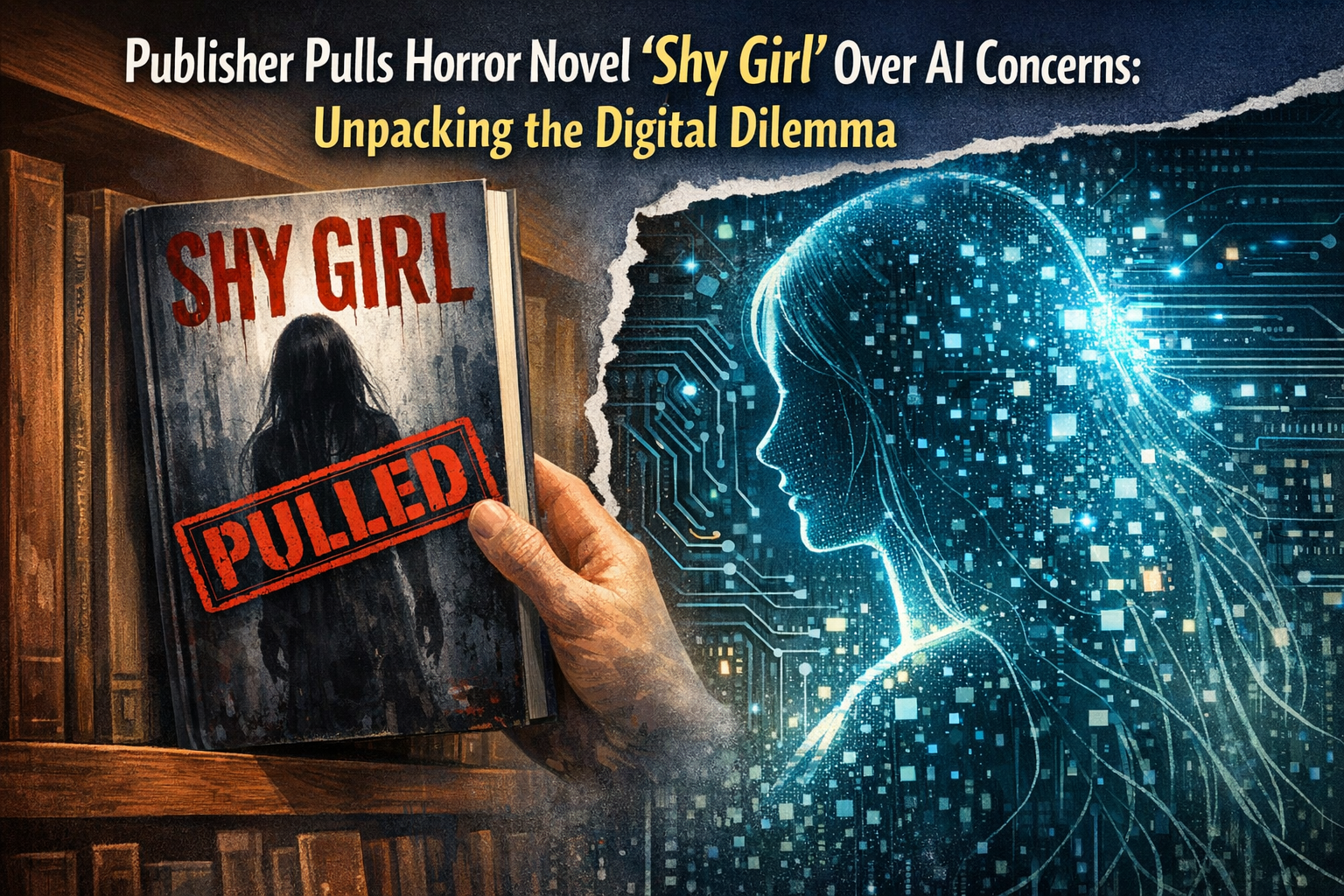
The publishing world, traditionally a bastion of human creativity, is currently grappling with a seismic shift brought about by artificial intelligence. This evolving landscape recently hit a dramatic peak when a major publisher made headlines by announcing, Publisher pulls horror novel ‘Shy Girl’ over AI concerns. The decision sends ripples throughout the literary community, forcing a critical examination of authorship, authenticity, and the very definition of creative work in the digital age. This isn’t just an isolated incident; it’s a bellwether for the complex challenges and ethical quandaries emerging as AI tools become increasingly sophisticated and accessible to writers and content creators alike.
For decades, the journey of a manuscript from an author’s mind to a reader’s hands involved a clear, human-driven process: writing, editing, proofreading, and publishing. Now, with generative AI capable of producing compelling text at an unprecedented speed, the lines are blurring. The ‘Shy Girl’ incident serves as a stark reminder that the publishing industry, much like other creative sectors, must confront the profound implications of this technological revolution head-on. It’s a wake-up call, urging us to consider the future of human authorship and the integrity of the stories we consume.
The Incident: Why the Publisher Pulled Horror Novel ‘Shy Girl’ Over AI Concerns
The specifics surrounding the decision to pull the horror novel ‘Shy Girl’ are emblematic of the broader unease gripping the industry. While publishers typically retract books due to plagiarism, factual inaccuracies, or controversial content, the reason here is novel: suspicion of AI generation. This situation highlights a new frontier in content vetting, one where the authenticity of the author’s voice is questioned not by human critique of style, but by the potential involvement of non-human algorithms. The core issue revolves around the integrity of the creative process and whether a work primarily generated by AI aligns with the publisher’s ethical standards or contractual agreements. The dramatic news that a Publisher pulls horror novel ‘Shy Girl’ over AI concerns underscores a growing tension.
Reportedly, irregularities in the manuscript, perhaps an unusual consistency in prose, a lack of discernible human “flaws,” or even metadata hints, raised red flags. For a publisher, ensuring that a work is genuinely human-authored is not merely an ethical consideration; it also carries significant legal and financial implications, particularly concerning copyright and originality. An AI-generated novel, especially if created using copyrighted source material without proper licensing, could lead to a quagmire of legal challenges. The decision to pull ‘Shy Girl’ illustrates a proactive stance against these potential pitfalls, prioritizing reputation and ethical responsibility. This specific instance of a Publisher pulling horror novel ‘Shy Girl’ over AI concerns sets a significant precedent.
The Broader Landscape of AI in Creative Writing
The incident with ‘Shy Girl’ is not occurring in a vacuum. Over the past few years, the capabilities of large language models (LLMs) like OpenAI’s ChatGPT and Google’s Bard have astounded many, demonstrating an ability to write fiction, poetry, essays, and even scripts with remarkable fluency. This technological leap has sparked fervent debate among writers, editors, and publishers.
On one hand, proponents argue that AI can be a powerful tool for authors, assisting with brainstorming, outlining, overcoming writer’s block, or even generating rough drafts that can then be refined by a human. Imagine an author struggling with a particular scene, and an AI provides five different narrative approaches. This collaborative model could potentially democratize writing, making it more accessible to individuals who might otherwise lack the resources or time for extensive manual composition.
However, the rapid adoption of AI also raises serious concerns. The ease with which AI can generate vast amounts of text makes it difficult to distinguish between human and machine authorship. This blurs the lines of creativity, questioning where human ingenuity ends and algorithmic generation begins. The very existence of AI detection tools, which are themselves imperfect, underscores the complexity of this new challenge facing the publishing world, impacting decisions like when a Publisher pulls horror novel ‘Shy Girl’ over AI concerns. Furthermore, this concern is amplified as AI models become even more sophisticated, making detection increasingly challenging.
Unpacking the Authorship Quandary After ‘Shy Girl’ Novel Pull
The core of the issue surrounding incidents like the ‘Shy Girl’ retraction lies in profound ethical and legal questions. Who is the author of an AI-generated work? If an author uses AI extensively, should they disclose it? What happens to copyright if a work is not solely created by a human mind? These are the dilemmas that came to the forefront when the Publisher pulled horror novel ‘Shy Girl’ over AI concerns.
Current copyright law generally requires human authorship for a work to be copyrightable. This precedent is challenged by AI-generated content. If an AI “writes” a novel, who owns the rights to it? Is it the developer of the AI, the user who prompted it, or is it uncopyrightable altogether? These are not theoretical questions; they have real-world implications for authors’ livelihoods and publishers’ investments. The U.S. Copyright Office has recently clarified some positions, emphasizing human authorship as a prerequisite, yet the nuances of AI assistance remain murky. For more detailed insights into AI and intellectual property, one might refer to analyses from legal tech publications like Wired’s articles on AI copyright, which delve into the evolving legal landscape surrounding generative AI.
Furthermore, the ethical dimension extends to transparency. Should readers be informed if a book they are reading was primarily written by AI? Many argue that transparency is crucial for maintaining trust between authors, publishers, and their audience. The integrity of the literary ecosystem depends on this trust, and any perceived deception, intentional or not, can erode it significantly. The incident of a Publisher pulls horror novel ‘Shy Girl’ over AI concerns vividly illustrates the urgent need for industry-wide guidelines on AI usage and proper disclosure.

Ripple Effects: How ‘Shy Girl’ Resonates Across Publishing
The ripples from incidents like the ‘Shy Girl’ controversy extend far beyond the immediate parties involved, affecting every corner of the literary world. For authors, the pressure to prove originality could increase. Submissions might face more rigorous scrutiny, and the very process of writing could become intertwined with discussions about AI tools. Authors might need to declare their use of AI, or even provide evidence of their human authorship, creating new layers of bureaucracy and potential suspicion. The news that a Publisher pulls horror novel ‘Shy Girl’ over AI concerns certainly acts as a wake-up call for writers globally.
Publishers, on the other hand, are tasked with adapting their acquisition and vetting processes. They may need to invest in advanced AI detection software, develop new clauses in author contracts, and establish clear policies regarding AI-assisted writing. This represents a significant operational shift, demanding new expertise and ethical frameworks. The decision to make a statement like a Publisher pulls horror novel ‘Shy Girl’ over AI concerns is not taken lightly; it reflects a deep concern about the future of their core business model and the quality they promise their readership. This shift towards AI content verification is a critical development for the industry, as detailed in recent analyses by outlets like The Verge on AI and creativity.
The larger question is how this impacts literature itself. Will AI-generated content dilute the market, making it harder for human authors to stand out? Will the unique human perspective, emotion, and life experience that infuse great literature be devalued? These are existential questions for the art form, prompting a collective reflection on what we value in storytelling. For further exploration of how technology shapes our world, consider visiting TechPerByte.com for insights into emerging tech trends. The continuing debate around why a Publisher pulls horror novel ‘Shy Girl’ over AI concerns remains a central point in these discussions.
Safeguarding Reader Trust Post ‘Shy Girl’ AI Controversy
Ultimately, the relationship between a reader and a book is built on trust. Trust that the story is a product of human imagination, emotion, and experience. When the authenticity of authorship is called into question, as it was when a Publisher pulls horror novel ‘Shy Girl’ over AI concerns, that trust can be severely eroded. Readers invest their time, emotion, and money into books, expecting a genuine connection with a human storyteller.
If readers become skeptical about the origin of the content they consume, it could lead to a decline in engagement and even a backlash against the industry. Imagine a scenario where consumers actively seek out “human-verified” literature, creating a niche market for genuine human creativity while devaluing anything suspected of AI involvement. This would fragment the market and potentially harm independent authors and smaller publishers who might struggle with the resources to implement robust verification systems. The incident of the Publisher pulling horror novel ‘Shy Girl’ over AI concerns has undeniably amplified these anxieties, making reader trust a paramount concern.
To rebuild or maintain this trust, transparency is paramount. Publishers and authors must engage in open dialogue with readers about the role of AI in their work. This could range from clear disclosures in book prefaces to innovative ways of showcasing the human element behind the creative process. Maintaining the human connection in digital content is a challenge that TechPerByte.com explores in its digital ethics discussions. This commitment to transparency is a direct response to issues highlighted when a Publisher pulls horror novel ‘Shy Girl’ over AI concerns.
Charting a Course Forward: Strategies for Human-Centric Publishing
As the publishing world continues to grapple with the implications of AI, proactive strategies are essential to preserve the integrity of literature and support human creativity. This requires a multi-faceted approach involving authors, publishers, tech developers, and readers. The incident where a Publisher pulls horror novel ‘Shy Girl’ over AI concerns serves as a pivotal moment, forcing the industry to confront its future, and develop forward-thinking solutions.
- Clear Guidelines and Policies: Publishers need to establish unambiguous guidelines for AI usage in submitted manuscripts. This might include mandatory disclosure of AI tools used, specific prohibitions against full AI generation, or thresholds for AI-assisted content. The clarity here directly addresses the kind of ambiguity that led to the ‘Shy Girl’ situation, providing a roadmap for future submissions.
- Advanced Detection Tools: While no AI detection tool is perfect, continuous development and improvement are crucial. Publishers and literary agencies will increasingly rely on these tools as a first line of defense. However, these tools must be used judiciously, acknowledging their limitations and potential for false positives.
- Emphasizing Human Value: The industry must actively promote and celebrate human authorship. Marketing campaigns could highlight the unique struggles, inspirations, and personal journeys of authors, reinforcing the irreplaceable value of human creativity.
- Education and Training: Authors and editors need education on the ethical use of AI tools. Understanding how to leverage AI responsibly as an assistant, rather than a replacement for human thought, is key. This education can help prevent future instances where a Publisher pulls horror novel ‘Shy Girl’ over AI concerns by promoting best practices.
- Community Dialogue: Open discussions within the literary community, involving writers, agents, editors, and readers, are vital for shaping a consensus on AI’s role. This collaborative approach can help define shared values and best practices.
It is a reminder that while technology offers incredible potential, it also demands careful consideration of its impact on human endeavor and creative expression. The goal should not be to ban AI outright, but to integrate it thoughtfully, ensuring it enhances rather than diminishes the human element of storytelling. The future of publishing depends on finding this delicate balance. This entire discussion stems from the groundbreaking news that a Publisher pulls horror novel ‘Shy Girl’ over AI concerns.
As we move forward, the narrative around AI in publishing will undoubtedly evolve. What remains constant is the human desire for authentic stories, crafted with passion and purpose. The challenge now is to navigate this digital frontier without losing sight of the core values that make literature so powerful and enduring. The ‘Shy Girl’ saga is more than just a cautionary tale; it’s a catalyst for introspection and innovation in an industry poised on the brink of profound transformation. How we respond to the reasons a Publisher pulls horror novel ‘Shy Girl’ over AI concerns will define the literary landscape for generations to come.
#AI
#PublishingIndustry
#AuthorRights
#DigitalEthics
#LiteraryFuture
#ContentAuthenticity
#BookRetraction
#CreativeWriting
#TechInPublishing
#ShyGirlNovel
#AIInLiterature