Why AI Startups Are Selling The Same Equity At Two Different Prices
The world of artificial intelligence (AI) startups is a whirlwind of innovation, rapid growth, and often, perplexing financial maneuvers. Among the most intriguing and, at times, bewildering trends, is the phenomenon of high-growth AI companies selling the same equity at vastly different prices. It begs the question: Why AI startups are selling the same equity at two different prices? This isn’t just a quirky anomaly; it’s a fundamental shift in how valuations are perceived and managed in a sector characterized by unprecedented potential and equally unprecedented speculation.
In this comprehensive guide, we’ll delve deep into the intricacies of this dual-price equity scenario, exploring the driving forces, the implications for founders, investors, and employees, and strategies to navigate its complexities. Understanding these dynamics is crucial for anyone involved in the fast-paced AI ecosystem.
The Core Problem: Unpacking Dual-Price Equity in AI Startups
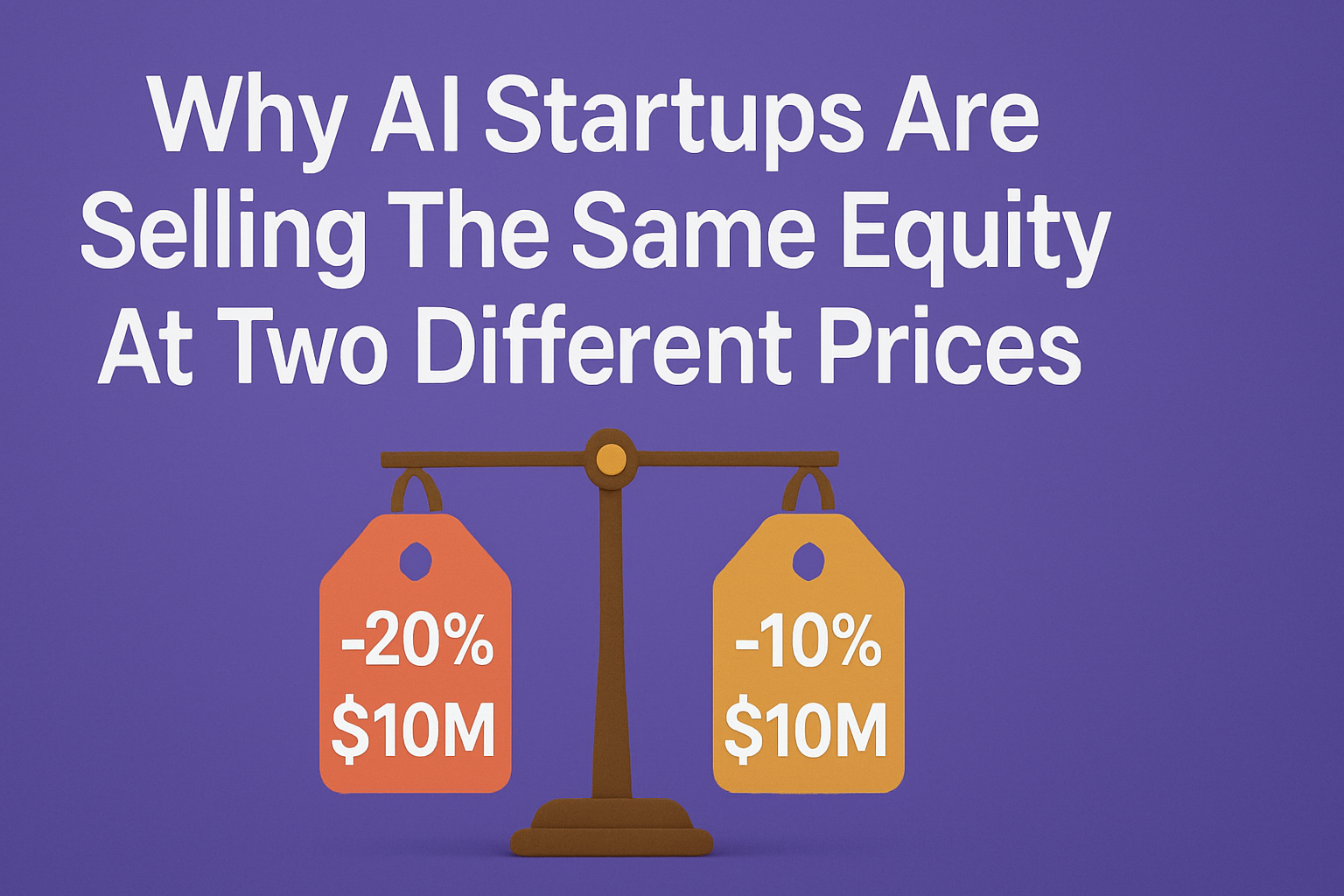
At its heart, the concept of dual-price equity refers to situations where different investors, or even the same investor at different times, acquire shares in an AI startup at significantly varied valuations, sometimes within a short period. This isn’t merely about standard venture capital rounds progressing from seed to Series A, B, and beyond, where valuations naturally increase with milestones met. Instead, it speaks to parallel pricing streams—one often a primary round led by institutional investors, and another, perhaps a secondary sale or a unique strategic investment, occurring simultaneously or closely thereafter at a starkly different price point.
This situation is particularly pronounced in the AI sector due to its unique characteristics: the exponential growth potential, the intense competition for talent and technology, and the relatively nascent yet rapidly maturing market. Traditional valuation models often struggle to keep pace with the hyper-growth and speculative nature of AI innovation, leading to more flexible and sometimes opaque pricing mechanisms.
For founders, managing this differential equity pricing can be a tightrope walk. For investors, it means navigating a landscape where the “fair market value” is often a moving target, influenced by factors beyond conventional financial metrics. This discrepancy is more than a mere accounting curiosity; it reflects deeper structural forces at play in AI investment.

Driving Factors Behind Differential Valuations in AI Equity
Several intertwined factors contribute to the emergence of dual-price equity in AI startups. Understanding these drivers is key to deciphering why the same stake can command disparate values.
Early Investors vs. Late-Stage Capital: Risk and Reward Differentials
One of the most common reasons for varying equity prices lies in the inherent risk profiles of different investor types. Early-stage investors (angels, seed funds) take on maximal risk when a startup is little more than an idea and a small team. Their equity is acquired at a much lower valuation, reflecting that high risk. Late-stage investors (growth equity, private equity, sometimes strategic corporate VCs) come in when the company has proven product-market fit, significant revenue, and a clearer path to profitability or exit. Their investment is less risky, thus justifying a higher valuation per share.
However, the AI space often compresses these stages. A startup might go from seed to Series C in a shorter timeframe than in other industries, with each round dramatically escalating the valuation. The perceived “future value” of AI technology drives this rapid re-rating, sometimes leaving early investors sitting on shares that are worth multiples of their original investment, leading to opportunities for secondary sales at prices higher than initial investments but potentially lower than the latest primary round.
Secondary Markets and Liquidity: An Unofficial Pricing Mechanism
The rise of secondary markets for private company stock is a significant contributor to the differential pricing phenomenon. In these markets, existing shareholders—often early employees, advisors, or even initial angel investors—sell a portion of their vested equity to new investors before a public offering or major acquisition. These sales are typically at a discount to the most recent primary funding round’s valuation, as they offer immediate liquidity to sellers and an opportunity for buyers to get in at a potentially lower price, albeit with less control over terms than in a primary round.
For AI startups, where employees might hold substantial equity and face long lock-up periods before an IPO, secondary markets provide a crucial outlet. The prices fetched in these secondary transactions can create a ‘shadow valuation’ that differs from the official valuation set by the board and lead investors in a primary funding round. This creates situations where the nominal value of shares differs from their immediate tradable value.
Convertible Notes and SAFEs: Conversion Complexities
Many AI startups begin their fundraising journey with convertible instruments like Convertible Notes or Simple Agreements for Future Equity (SAFEs). These instruments defer the valuation discussion to a later, priced round. When these notes convert into equity, they do so at a discount to the valuation of the future priced round, or at a pre-set valuation cap, whichever is more favorable to the early investor. This mechanism inherently leads to early investors receiving equity at a lower effective price per share than the new money coming in during the priced round.
The structure of these agreements can lead to complex cap tables and a situation where different groups of shareholders effectively paid different prices for the “same” underlying equity, based on the timing and terms of their initial investment. This is a standard practice but contributes significantly to the perceived dual pricing.
Strategic Investors vs. Financial Investors: Value Beyond Capital
Another powerful driver of differential equity pricing comes from the distinction between strategic investors and purely financial investors. A strategic investor is typically a large corporation (e.g., Google, Microsoft, NVIDIA, Amazon) that invests in an AI startup not just for financial returns, but also for strategic benefits—such as access to proprietary technology, talent acquisition, partnership opportunities, market expansion, or even eliminating a potential future competitor.
These strategic investors may be willing to pay a premium above the prevailing market valuation for a stake in an AI startup, because the non-financial benefits significantly add to their overall corporate value. A financial investor, on the other hand, is primarily focused on the monetary return on investment and will adhere more strictly to market-driven valuations. This disparity can lead to situations where a small, strategically vital equity stake is valued differently than a larger, purely financial investment.
The Role of AI’s Unique Dynamics in Equity Valuation Discrepancies
The AI sector itself possesses characteristics that amplify these valuation complexities, making it a hotbed for differential equity pricing. The sheer pace of technological advancement, the scarcity of top talent, and the speculative nature of future applications all play a part.
Unprecedented Growth Projections and Speculation
AI’s potential to revolutionize industries, from healthcare to automotive to finance, leads to incredibly aggressive growth projections. Investors are betting on the future, often valuing companies not on current revenue, but on anticipated market dominance. This future-oriented valuation is highly speculative and can lead to rapid jumps in perceived value, attracting waves of investors willing to pay escalating prices, while others might view those prices with skepticism.
You can learn more about understanding startup valuations on our blog at TechPerByte.
Talent Wars and Intellectual Property as Premium Assets
The demand for elite AI researchers, engineers, and data scientists far outstrips supply. Startups with leading AI talent and robust intellectual property (IP) portfolios are incredibly attractive. Investors might pay a premium for a startup simply to acquire or secure access to its human capital and proprietary algorithms. This premium directly impacts equity valuation, as a company’s perceived value is tied to its ability to attract and retain the best minds in AI.
Technological Moats and Data Advantage
In AI, a sustainable competitive advantage often stems from a technological moat—unique algorithms, proprietary datasets, or specialized hardware that is difficult for competitors to replicate. Startups that demonstrate a strong, defensible moat, particularly those with access to unique or vast datasets essential for training sophisticated AI models, are often afforded higher valuations. The perceived durability of this advantage can influence different investors’ willingness to pay varying prices for a stake.

Implications for Founders, Investors, and Employees
The phenomenon of dual-price AI startup equity has far-reaching implications for all stakeholders involved in the ecosystem.
- For Founders: Managing differential equity pricing requires immense skill. It can lead to complex cap table management, potential internal friction if employees perceive their equity to be undervalued relative to new investors, and the challenge of balancing dilution with maximizing capital. Founders must be transparent and strategic in their fundraising.
- For Early Investors: While differential pricing often means their early investment has grown significantly in value, navigating secondary markets for partial exits or understanding the impact of new rounds on their ownership percentage becomes critical. They might need to decide whether to sell at a discount on a secondary market or hold out for a higher price in a later primary round or IPO.
- For Late-Stage Investors: The challenge lies in thorough due diligence to justify the higher valuations they are paying. They must carefully assess the sustainability of growth, the strength of the technological moat, and the potential for future returns, avoiding overpaying in a highly competitive environment.
- For Employees: Stock options and equity grants are a major component of compensation in AI startups. Understanding the true value of their equity, especially in the context of secondary markets and potential valuation fluctuations, is crucial. Perceptions of unfairness if others are buying in at different rates can impact morale and retention.
Navigating the Complexities: Strategies for All Parties
Given the intricacies of why AI startups are selling the same equity at two different prices, strategic approaches are essential for founders, investors, and employees alike.
For Founders: Transparency and Strategic Capital Management
Founders must prioritize transparency regarding their cap table and valuation dynamics. Clear communication with early investors and employees about vesting schedules, valuation methodologies, and the rationale behind different pricing rounds can mitigate potential issues. Strategically, founders should understand the trade-offs between speed of funding, valuation, and dilution. Utilizing different financial instruments (e.g., specific tranches for strategic investors) can help manage price discrepancies consciously. Engaging with experienced legal and financial advisors is paramount for navigating these complex structures effectively. It’s about being proactive, not reactive, to the evolving valuation landscape.
For Investors: Rigorous Due Diligence and Terms Understanding
Investors must conduct exceptionally thorough due diligence, looking beyond headline valuations. This includes deep dives into technology, intellectual property, market potential, competitive landscape, and team capabilities. Crucially, understanding the specific terms of different investment rounds—including liquidation preferences, anti-dilution provisions, and voting rights—is vital. Late-stage investors, in particular, need to justify premium valuations with clear growth catalysts and exit strategies. Exploring secondary market opportunities can offer alternative entry points, but these also require careful analysis of liquidity and governance.
For Employees: Understanding Equity and Long-Term Value
Employees should educate themselves extensively about their equity compensation. This means understanding vesting schedules, strike prices, valuation changes over time, and potential tax implications of exercising options or participating in secondary sales. It’s important to view equity as a long-term asset whose value is subject to market dynamics. Engaging with financial planners who specialize in startup equity can provide personalized advice. Don’t just focus on the latest valuation; understand the journey of your equity and what conditions need to be met for its full value to be realized. For more insights into AI investing, visit TechPerByte.
Conclusion: The Evolving Landscape of AI Startup Equity
The phenomenon of Why AI startups are selling the same equity at two different prices is not a sign of instability but rather a reflection of the AI sector’s dynamic, high-growth, and often speculative nature. It’s an intricate dance between risk, reward, strategic value, and market demand. While it presents challenges in valuation consistency, it also offers unique opportunities for savvy investors and founders. The rapid evolution of AI technology, coupled with the intense competition for market leadership and talent, creates a fertile ground for these differential pricing structures.
As the AI industry continues to mature, we can expect these valuation complexities to persist and evolve. Success for all stakeholders will hinge on a deep understanding of these underlying drivers, meticulous due diligence, strategic planning, and transparent communication. By embracing these realities, participants in the AI ecosystem can better position themselves to capitalize on the transformative power of artificial intelligence.
#AI
#StartupFunding
#EquityValuation
#TechInvestment
#VentureCapital
#AIStartups
#TechFinance
#CapitalMarkets
#SecondaryMarket