Anthropic’s Ascendancy Prompts OpenAI Investor Rethink
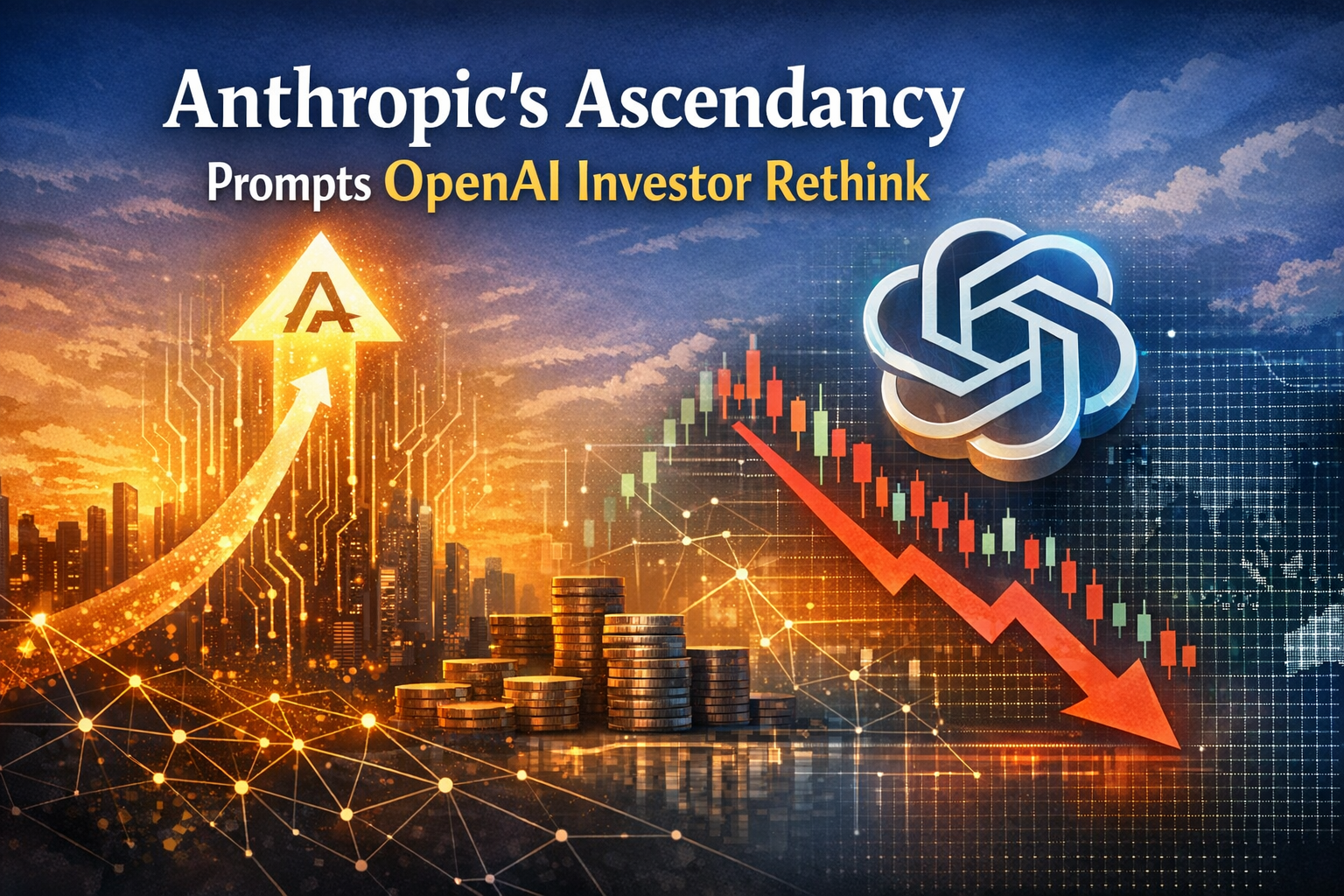
The artificial intelligence landscape is evolving at an unprecedented pace, marked by rapid innovation and intense competition. In this dynamic environment, a significant shift is becoming apparent: Anthropic’s rise is giving some OpenAI investors second thoughts. This emerging narrative highlights not just the growth of a new AI powerhouse but also the complex, often unpredictable, dynamics of venture capital in the tech sector. As Anthropic continues to make waves with its Claude models and responsible AI approach, the spotlight on its success is inevitably causing re-evaluations among those who have previously poured significant capital into its prominent rival, OpenAI, underscoring a pivotal moment in AI investment.
For years, OpenAI dominated headlines, drawing massive investments and establishing itself as the frontrunner in generative AI with products like ChatGPT. Its rapid advancements captured the imagination of the public and the wallets of investors, propelling it to extraordinary valuations. However, Anthropic, founded by former OpenAI researchers, has steadily built its own formidable reputation, securing substantial funding rounds and carving out a distinct niche. This blog post delves into the factors contributing to Anthropic’s impressive ascent, the reasons behind the investor reassessment, and what this competitive shift means for the broader AI industry, offering practical insights for businesses and developers alike.
The Genesis of a Rival: Anthropic’s Unique Approach
Anthropic was born from a desire to develop AI safely and responsibly. Founded by sibling duo Dario and Daniela Amodei, along with other key researchers who departed OpenAI, the company set out with a clear mission: to build reliable, interpretable, and steerable AI systems. Their flagship model, Claude, is designed with a strong emphasis on “Constitutional AI,” a set of principles derived from extensive research that guide its behavior and decision-making, aiming to reduce harmful outputs and increase trustworthiness. This approach is not merely a marketing slogan; it’s deeply embedded in their development pipeline, influencing everything from model architecture to training data curation.
This commitment to safety and ethics has resonated deeply with a segment of the market and investor community. While OpenAI faced scrutiny over leadership changes and the rapid deployment of powerful models, sometimes without sufficient public understanding of their implications, Anthropic positioned itself as a more measured and conscientious developer. This strategic differentiation has not only attracted top talent seeking a mission-driven environment but also significant capital from major players like Google and Amazon, who have collectively invested billions. These investments are not just financial; they represent a strategic alignment with Anthropic’s long-term vision for ethical AI.
The emphasis on robust safety protocols and a more predictable, principled development roadmap offers a different kind of value proposition for investors. In an industry grappling with ethical dilemmas, potential biases, and regulatory uncertainty, Anthropic’s commitment to “safe, interpretable, and steerable” AI offers a sense of stability and long-term viability that can be highly appealing. This isn’t just about technological superiority; it’s about a philosophical alignment that an increasing number of investors find crucial for sustainable growth and mitigating reputational risks in the rapidly evolving AI landscape.
Market Dynamics: A Competitive AI Arena
The AI investment landscape is characterized by intense competition for groundbreaking technology, top talent, and market share. While OpenAI pioneered the recent generative AI boom and established a significant lead, the sheer scale of the opportunity means there is ample room for multiple dominant players. Anthropic’s ability to attract colossal investments, nearing $7.3 billion from Amazon and an additional $2 billion from Google, signals a profound confidence in its future trajectory and technological capabilities. These aren’t just minor funding rounds; they are strategic alliances that reshape the entire competitive ecosystem.
This influx of capital empowers Anthropic to accelerate research, expand its model capabilities (such as the recent Claude 3 family, which boasts impressive benchmarks), and scale its infrastructure, directly challenging OpenAI’s perceived dominance. The market is now witnessing a fierce battle for enterprise customers, with both companies vying to integrate their advanced AI solutions into various business workflows, from customer service automation to complex data analysis. Enterprises are seeking reliable, secure, and customizable AI, and both companies offer compelling, though distinct, solutions tailored to different priorities.
The strategic partnerships formed by Anthropic, particularly with tech giants, provide not only substantial financial backing but also crucial distribution channels and computational resources. Amazon’s investment, for instance, comes with a commitment to make Claude available to AWS customers, directly competing with Microsoft’s deep integration of OpenAI’s models into Azure. These alliances are reshaping the competitive landscape, demonstrating that the rising tide lifts many boats, but also that Anthropic’s rise is giving some OpenAI investors second thoughts about the exclusivity and ultimate profitability of their initial, singular bets. The diversification of strategic partnerships highlights a broader industry trend of not relying on a single AI provider.

Why Anthropic’s Rise is Giving OpenAI Investors Second Thoughts
The reassessment by some OpenAI investors isn’t a sign of OpenAI’s failure, but rather a reflection of a maturing market and increased competition. Several compelling factors contribute to this shift in investor sentiment:
- Valuation Scrutiny: OpenAI’s valuation soared rapidly, reaching tens of billions in a relatively short period. While impressive, such rapid ascent often leads investors to question the sustainability of growth and the potential for further significant returns. Anthropic’s more recent, slightly lower, but still substantial valuations might appear more attractive from a growth potential perspective, offering a perceived higher upside for new capital. Investors are always looking for opportunities where their capital can generate exponential returns, and a more diversified portfolio across leading AI players hedges against overvaluation in one entity.
- Leadership Stability and Governance Concerns: OpenAI experienced significant internal turmoil in late 2023, including the temporary ousting of CEO Sam Altman. Such highly publicized events can create considerable uncertainty and concern among investors regarding corporate governance, strategic direction, and overall stability. Anthropic, having a more stable leadership structure and a focused mission, could be perceived as a more predictable and safer bet for long-term investment, particularly for those prioritizing consistent execution over high-profile drama.
- Ethical AI as a Competitive Advantage: As mentioned, Anthropic’s unwavering focus on constitutional AI and safety appeals to a growing number of stakeholders, including enterprise clients and regulators. This philosophical alignment could be seen as a long-term competitive advantage, particularly as regulatory bodies and public opinion increasingly demand more responsible and transparent AI development. Investors are recognizing that ethical considerations are not just moral imperatives but increasingly crucial for market acceptance and mitigating future legal and reputational risks.
- Diversification Strategy: Sophisticated venture capital and institutional investors rarely put all their eggs in one basket, especially in a nascent yet highly impactful sector like AI. The emergence of a strong contender like Anthropic provides a compelling opportunity to diversify holdings within the high-growth AI sector. It’s not necessarily about abandoning OpenAI but about hedging bets and ensuring exposure to different leading approaches and business models in AI, thereby optimizing portfolio risk and return.
When Anthropic’s Rise Gives OpenAI Investors Second Thoughts
The heightened competition spurred by Anthropic’s rise is giving some OpenAI investors second thoughts, and this ripple effect extends throughout the entire AI ecosystem. This dynamic rivalry is fostering an environment of accelerated innovation, as both companies strive to outdo each other in model capabilities, safety features, and application development. This pushes the boundaries of what AI can achieve and how responsibly it can be deployed.
Increased Focus on Responsible AI Standards
Anthropic’s success significantly underscores the growing importance of responsible AI development. Its constitutional AI approach serves as a tangible model for how advanced AI can be built with ethical guardrails from the ground up, moving beyond mere statements of intent. This puts considerable pressure on all AI developers, including OpenAI, to not only match technological advancements but also to prioritize safety, transparency, and fairness in their own models. The industry is rapidly moving towards a future where AI prowess is measured not just by raw capability but also by its societal impact, trustworthiness, and adherence to ethical guidelines. For more insights on the future of AI ethics and innovation, you can read articles on TechPerByte.
A More Diverse and Robust AI Market
The rise of multiple strong contenders reduces the risk of a single “winner-take-all” scenario in AI, which is generally unhealthy for innovation and market choice. This diversity is immensely beneficial for the overall innovation trajectory, as different companies pursue varied research paths, architectural designs, and product strategies. It also provides consumers and businesses with more choice, fostering healthier competition that can lead to better, more specialized, and potentially more affordable AI solutions. This is a topic frequently discussed in leading tech publications like The Verge’s AI section, which closely tracks these dynamic developments and their implications for the broader tech landscape.
Challenges and Opportunities for Smaller Players and Startups
While competition among giants like Anthropic and OpenAI can be beneficial in many ways, it also presents significant challenges for smaller AI startups. The massive capital raised by both behemoths sets an incredibly high bar for investment and operational scale, making it harder for new entrants to compete for talent, compute resources, and market visibility. Startups will increasingly need to find even more specialized niches, develop truly disruptive foundational technologies, or offer unique integration services to compete effectively for funding against these well-resourced players. Conversely, it also presents opportunities for startups to build on top of these foundational models, offering specialized applications or services that the larger companies cannot agilely address. Access to extensive computing resources and top-tier researchers is becoming a critical differentiator, pushing startups to innovate smart and lean.

Practical Implications for Businesses and Developers
For businesses looking to integrate AI into their operations, the burgeoning competition between Anthropic and OpenAI is largely a positive development. It means more choice, potentially better pricing, and a stronger focus on robust, enterprise-grade features and support, ultimately accelerating the adoption of powerful AI tools.
- Evaluate Both Platforms Thoroughly: Companies should move beyond general perceptions and thoroughly evaluate both Claude and ChatGPT-based solutions for their specific operational needs and use cases. Anthropic’s Claude, with its strong emphasis on safety, explainability, and exceptionally long context windows, might be better suited for applications requiring high reliability, extensive document analysis, or sensitive data handling where ethical considerations are paramount. OpenAI’s models, known for their broad general intelligence, diverse plugin ecosystem, and creative generation capabilities, might excel in tasks like content creation, coding assistance, or broader application development where versatility is key.
- Prioritize Ethical Considerations in AI Procurement: As AI becomes more integral to decision-making and customer interactions, the ethical implications of its use grow exponentially. Businesses must carefully consider the responsible AI principles embedded in the models they choose and the vendor’s commitment to these principles. Anthropic’s “Constitutional AI” offers a clear framework for this, but all providers are being pushed to improve their ethical stances, necessitating due diligence from businesses. Aligning with an AI provider whose ethical framework mirrors your own company’s values can prevent future complications.
- Stay Informed on Strategic Partnerships and Ecosystems: The strategic alliances forged by these companies (e.g., Anthropic with Amazon, OpenAI with Microsoft) will significantly dictate access to specific cloud infrastructure, specialized tooling, developer resources, and integration pathways. Understanding these partnerships is crucial for long-term integration strategies, as they impact scalability, cost-efficiency, and access to a broader suite of services. Keeping an eye on the latest industry analysis, like those often featured on sites such as TechCrunch’s AI news, is essential for informed decision-making.
- Prepare for Rapid Evolution and Skill Development: The pace of AI development is not slowing down; it’s accelerating. Businesses and developers must remain agile, ready to adapt to new model releases, improved capabilities, evolving API structures, and shifting best practices from both Anthropic and OpenAI. Investing in continuous learning, internal training programs, and leveraging external learning resources, like those available on TechPerByte’s AI section, are vital for staying ahead of the curve and maximizing the benefits of these rapidly advancing technologies.
Conclusion: A Maturing AI Landscape
The narrative that Anthropic’s rise is giving some OpenAI investors second thoughts is more than just a headline about competitive rivalry; it signifies a maturing AI industry. It underscores that the initial gold rush mentality is giving way to a more nuanced appreciation of diverse approaches, ethical considerations, long-term sustainability, and robust business models. This shift indicates a move towards a more balanced and discerning investment strategy within the AI sector, where reliability and responsibility are gaining as much prominence as raw innovation.
As Anthropic continues to grow its influence and technological capabilities, it will undoubtedly push OpenAI and other players to innovate even faster and more responsibly. This healthy competition is ultimately beneficial for the advancement of AI itself, leading to more robust, safer, and ultimately more impactful technologies for everyone. The shifting investor sentiment is a clear indicator that the future of AI is unlikely to be a monopoly but rather a vibrant, multi-faceted ecosystem where innovation thrives on diverse perspectives, strong competition, and a collective commitment to building intelligent systems that benefit humanity.
#AI
#Anthropic
#OpenAI
#AITechnology
#TechInvestment
#GenerativeAI
#StartupFunding
#EthicalAI
#ClaudeAI
#ChatGPT
#VentureCapital